
In an earlier post, I talked about the Star Picks and why I use them almost exclusively for my electric guitar. In this post, I share options for picks that I find useful when playing other styles of guitar and other acoustic stringed instruments.
As a music educator and performer, I rarely say no to student requests or gigs. I’m usually up for the challenge. About 10 years ago, a student of mine referred their friend, who wanted to learn mandolin, to me for lessons. I didn’t perform on the mandolin frequently, but I was not going to say no to learning how to teach it, so I bought a good mandolin, spent a month familiarizing myself with the instrument, and agreed to meet with the student.

I was honest in telling the prospective student that I had played around on a mandolin before, but I was not, strictly speaking, a mandolin teacher. He understood, but we hit it off, so he started lessons with me.
So, I started teaching the mandolin because of a request for lessons on the instrument, not because I was already an experienced mandolin teacher. A month later, if I can say so myself, I was a pretty confident mandolin teacher. Now, to be fair, when I’m challenged musically with something interesting, I commit completely, so I’m not saying any of that came without any effort. What I’m saying is I didn’t shy away from a new music experience.
Some years later, I was called by the director of the Eastern Music Festival who asked me to play the 4th movement of Mahler’s symphony no. 7 on mandolin. Of course, I said yes, then spent the next month progressing to my highest level of ability.
I have a similar story when I think about how I came to play nuevo flamenco. Nuevo flamenco requires an acoustic guitar. It combines classical guitar with flamenco techniques to make them more listenable from a popular music point of view (meaning they are easier to present in public performances). This particular style of playing involves playing skills common to classical guitar, which is what my degrees and formal trainings involved, but it adds flamenco playing skills, which were new to me in 2010 when I was first asked if I would consider joining a nuevo flamenco band. Actually, I was first asked to sub for someone “just for a month,” but eight years later, I was still in the group. We were featured locally and nationally, appearing on NPR radio and some TV shows. We’d probably still be playing if the band members still lived near one another.
So, you may be wondering, what all this has to do with Picks. Here we go….
What are the best picks for acoustic guitar and mandolin?
No matter if I’m playing acoustic guitar or mandolin, one thing in common is the brand of pick I choose.
My preference is the D’Andrea Pro Plec Rounded Triangle Pick.

For my mandolin playing, I need rounded edges for smoothness when playing tremolo, but I need a slight point for clarity and speed. I had been told by others that small instruments require small picks. Let me be clear — that is not true! In fact, the D’Andrea Pro Plec Rounded Triangle pick, which is what I use for mandolin, was recommended to me as a bass pick given its relatively large size. (FYI: When I play bass, I don’t use picks unless I’m trying to emulate a particular person or song that used a pick).
The D’Andrea Pro Plec pick is my preference for acoustic instruments for 4 reasons:
- It’s larger size helps me control the angle of the pick. I often need to change the angle of the pick to accommodate various picking techniques.
- It’s comfortable to hold.
- It can be used on every side since it is symmetrical on each corner.
- It’s safe to use on nylon strings, so you don’t have to worry so much about nicks and scratches in the strings’ outer coating that can result in extra noise when using fingernails instead of a pick.
The D’Andrea Pro Plec is made of a thermoplastic blend, so it’s not made from the same material as the Star Picks, which I prefer for my electric playing. But the thickness (1.5 mm) of D’Andrea Pro Plec picks gives them durability, so they have a long life.
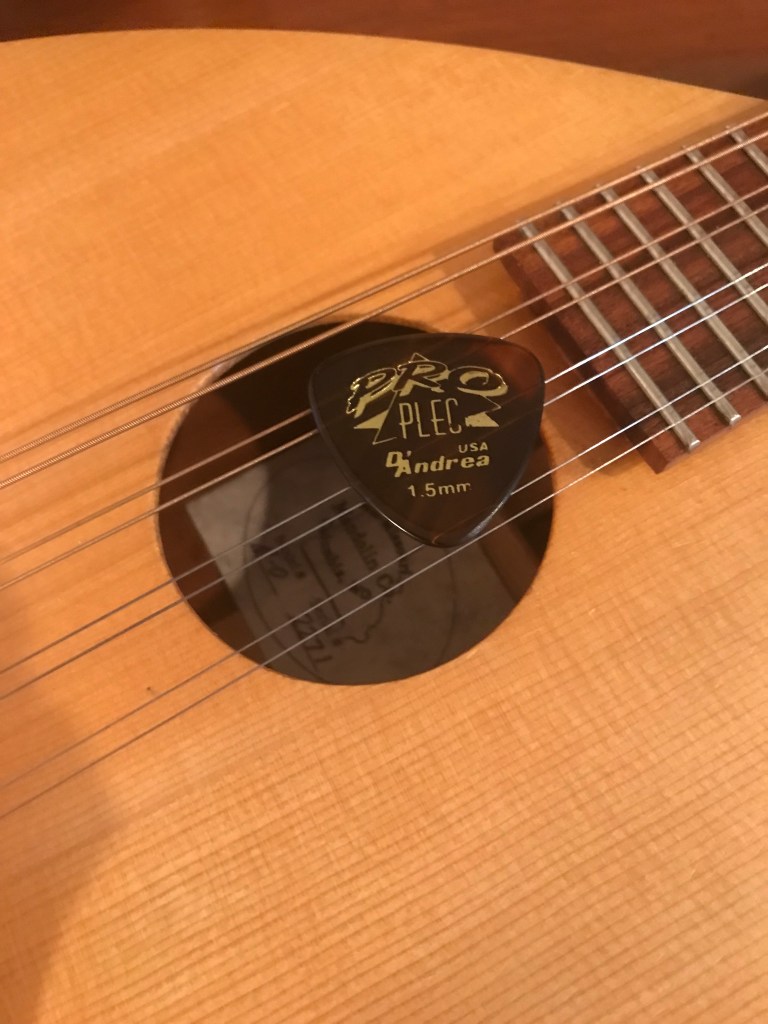
In terms of tone and attack, with good picking hand control, you can get bright or dark tones from this pick, with little effort. It has a warmer tone than thinner and more pointed picks thanks to its beveled edge. This is good especially if you need to plug in your acoustic guitar. I find that the warmer tone means I don’t have to adjust the EQ as much through my amp or PA system.
The D’Andrea Pro Plec doesn’t make as much pick noise as smaller picks (including the Star Pick, which is my preference on electric guitar) on acoustic instruments. The beveled edge of the pick is partially responsible for this. The rounded shape of the point helps keep the pick noise to a minimum, which means the true tone of the instrument can be heard. With a little extra firmness of grip, I get the punch I need to cut through the mix in a group setting when playing lead lines or emphasizing chords, but I can also relax my grip a bit, settling into an accompanying role with lighter strums or background lines when I need to.

The pick’s beveled edges are also perfect for nylon because they don’t cut into the string like some thinner picks do. Cutting into the strings cause little cuts or flaws in the outer coating of the string that can be heard when using your nails in the classical or flamenco style. That’s when you’ll appreciate the thicker beveled picks as they keep your nylon strings in playable condition much longer than when using sharper picks.
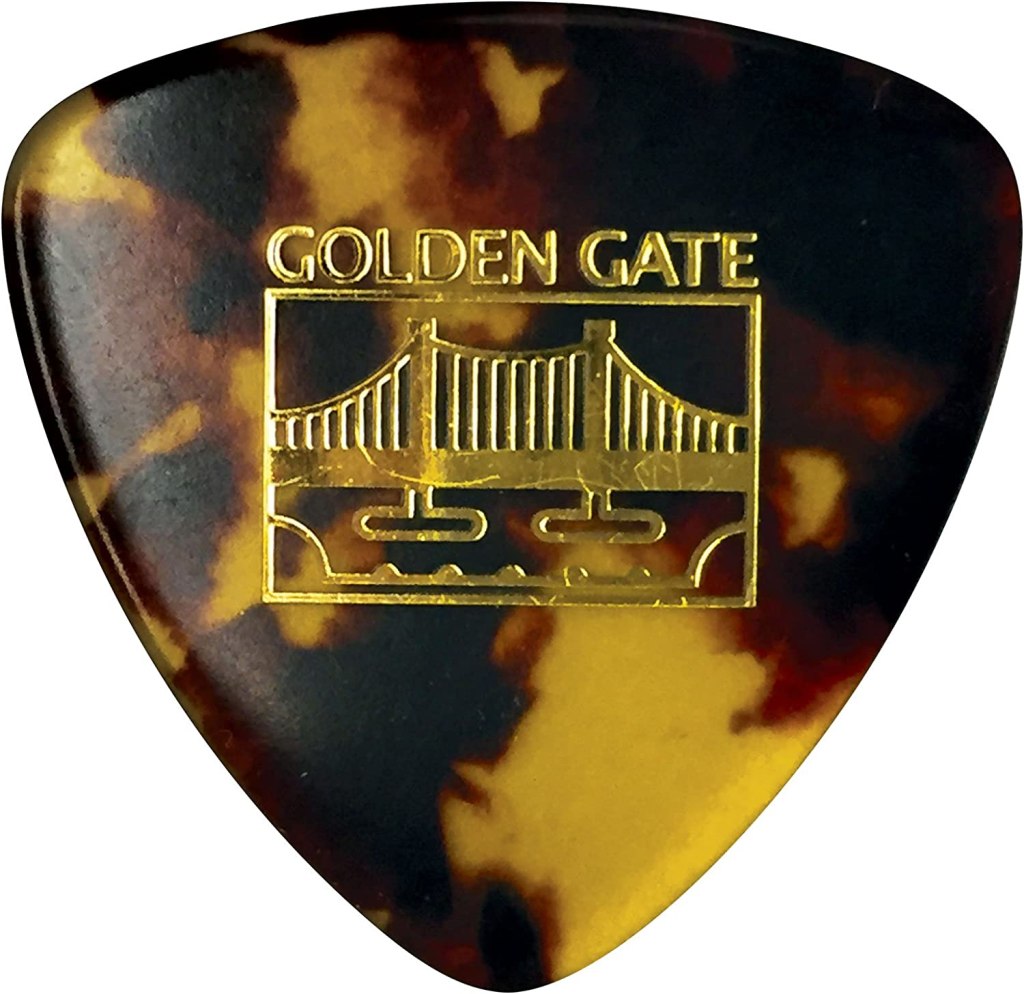
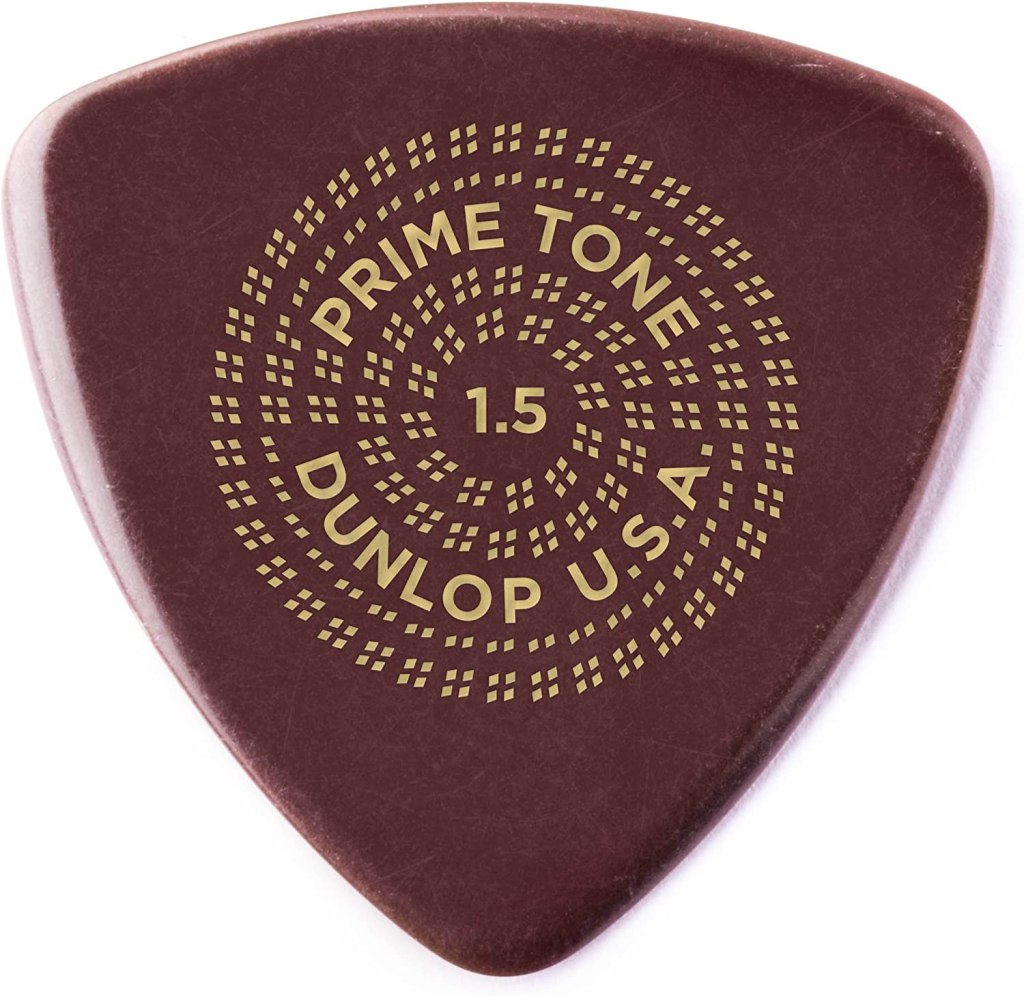
There are certainly other good pick options out there. The Golden Gate MP-10 Deluxe pick and the Dunlop Primetone picks both come to mind. I often use the Golden Gate on steel string guitar and the Dunlop Primetone on mandolin. Both of these picks have sizes, thicknesses, and weights that are close to the Pro Plec, which is probably why I like them. They all have different price points, so that can matter too.
In a future post, I’m going to tell you about another pick preference that I have for acoustic playing that I don’t get into here. That’s my swing jazz playing on my Selmer Macaferri style instruments. Stay tuned for that. Also, stay tuned for more on when and why you may need to use your fingers/fingernails for some styles of guitar.
I provide links to several of the products mentioned above so you can use my affiliate links. You don’t pay more by using these. It just helps support me.
 learnyourguitar.com
Leave a comment