

I’ve been teaching guitar lessons since 1987. Over the years, I’ve gotten hundreds of questions about guitar picks. In their first year of playing, my students’ pick choice is usually based on their favorite color, or whatever was included with their new guitar.
I don’t often get questions until the student finds a pick on my music stand or a table in the studio. The first couple questions I get are:
- Why is the pick shaped like this?
- Why does it have a hole in it?
Then, I might be asked questions about the pick’s thickness, weight, texture, and feel.
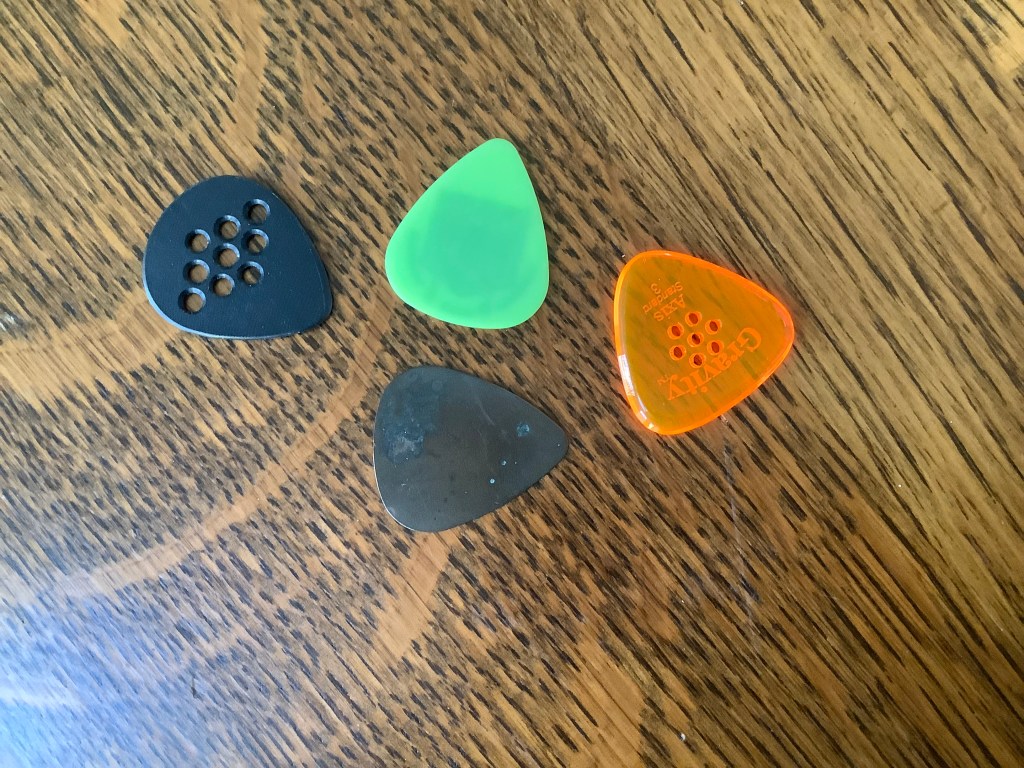
To be honest, pick preference is very personal and subjective. Luckily, picks are one of the least expensive items used by guitar players, so there can be room to experiment with these. If you end up with a batch of picks that you don’t like or don’t expect to use, you can do what I do and pass them on to someone else. Again, pick preference is personal so what you don’t like might work for someone else.
All this said, in this article, I’m going to share some of my experiences with picks. I’ve been experimenting with choosing and using picks for nearly 40 years now.

Below, I’ll tell you my pick preferences. I’ll share what I’ve used and why. I’ll also provide you with direct link so you can purchase these picks from reliable vendors.
What are the best picks for electric guitar?
When I first started playing in 1984, I used a lot of picks made of plastic. (Think of the picks that come in guitar starter kits or are in the free bin at stores and studios — the Fender medium picks, for example).

I played a lot, so I wore them out quickly. Pick slides carved grooves in the edges, and they would start cracking. I was buying new picks every month. I didn’t know of any alternatives, so I generally ended up spending about $1 for 4 picks, and those would last me a month or so.
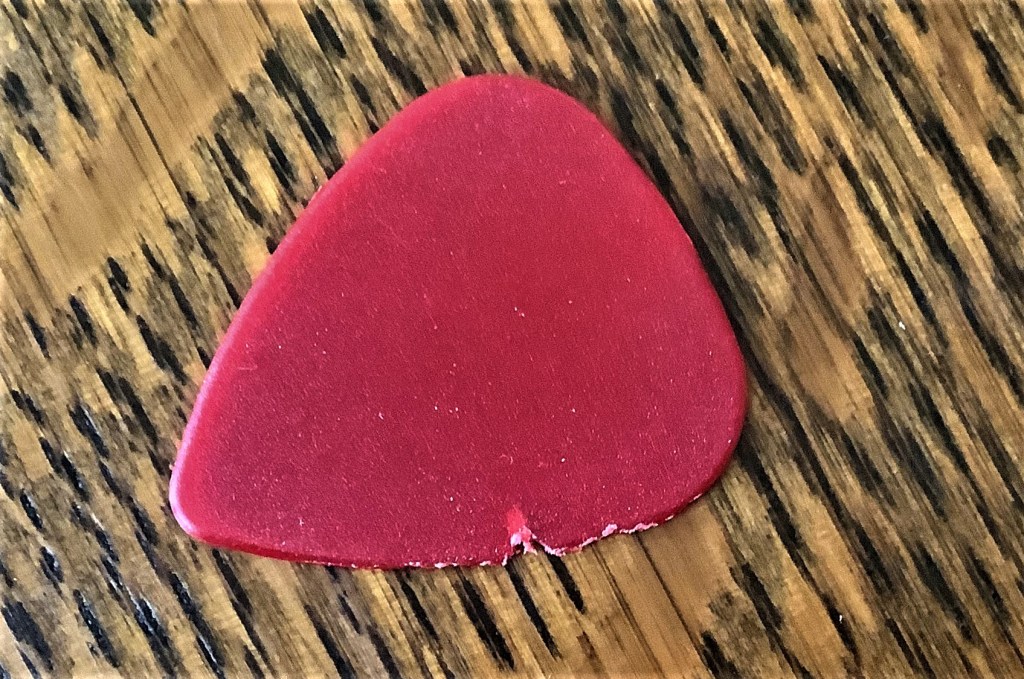

About 10 years later, in the 1990s, I stumbled onto a Dunlop Tortex pick. It didn’t wear out as easily.
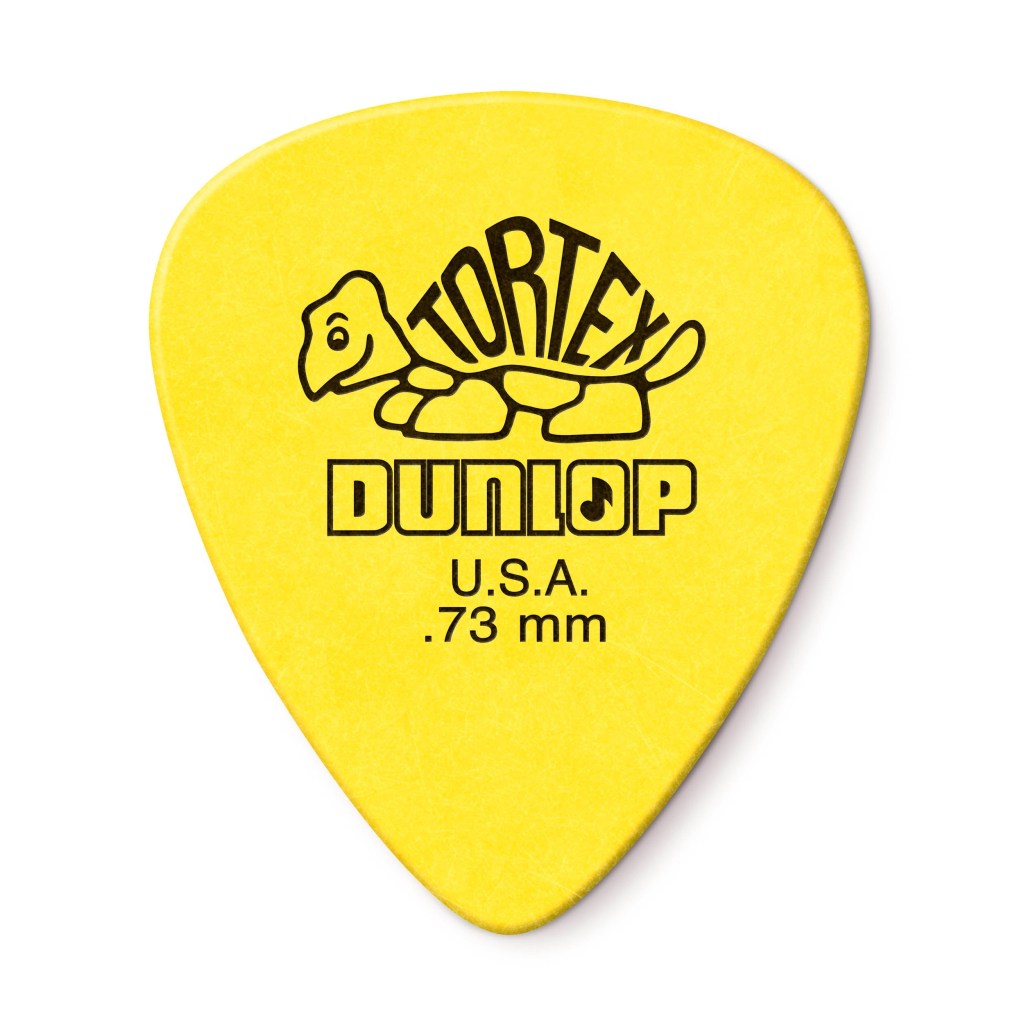
I used Dunlop Tortex picks for a while, but I’m what people call “an aggressive player,” so I would often have to reorient the pick in my hand in the middle of a tune. At the time, I was playing a lot of rock and metal music.

Throughout the mid-1990s, I learned my playing style a bit better — I actually had a light grip when playing rhythm, but I switched to a heavier grip when I soloed, so I was losing my pick position when I switched my grip.
I kept looking for the right pick.
Sometime around mid-2000s I used my first Everly Star Pick, and that’s the one that I still use today.

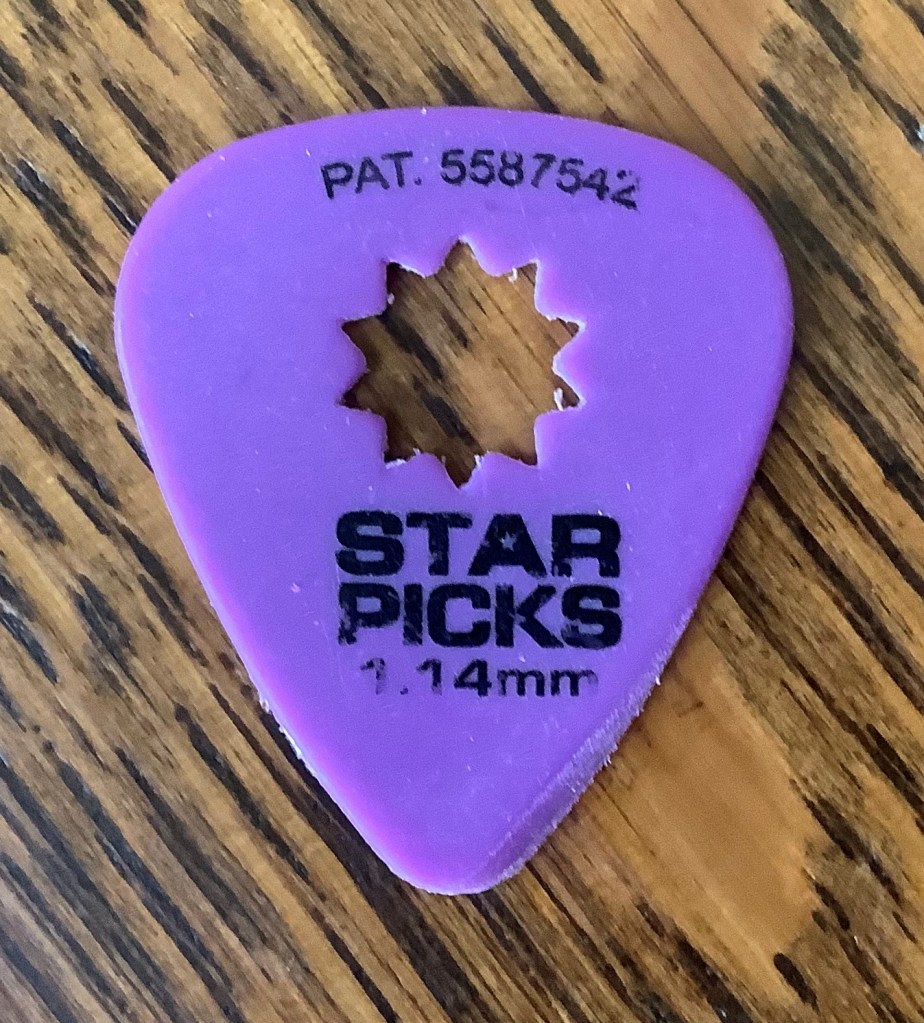
The Star Pick is made of the same general material as the Dunlop — Delrin, which is a form of plastic known for its wear resistance, warp resistance, and strength. Delrin is considered a low friction material, but the Star Pick is created in such a way that is has a matte finish rather than a glossy one, so it allows for a good grip.
The Star Pick gets its namesake because in the middle of the pick is a hole-punch in the shape of a star. This opening falls right where your index and thumb should meet when holding the pick. The shape of the hole has a spiky profile (rather than a circular one), and this allows for a really good grip.


This pick helps me maintain my pick position when changing my grip tension. I’ve used the Star Pick for well over a decade at this point and am confident recommending it. I use it with lots of different musical styles.
Star Picks tend to last longer than the standard plastic picks, probably by at least a factor of ten. To be fair, standard plastic picks have their place, but the Star Picks are my go-to now. The only problem with them is that they seem to disappear when I leave them lying around — my students grab them and take them home.
Like I said earlier, there are preferences in picks. Even if you select Star Picks like me, there are choices on thickness. If you’ve never experimented with different pick thicknesses, buy a sample pack of the different colors of the Star Pick. Each color designates a different thickness, so you can’t make aesthetic choices on colors unless you don’t care about the thickness.
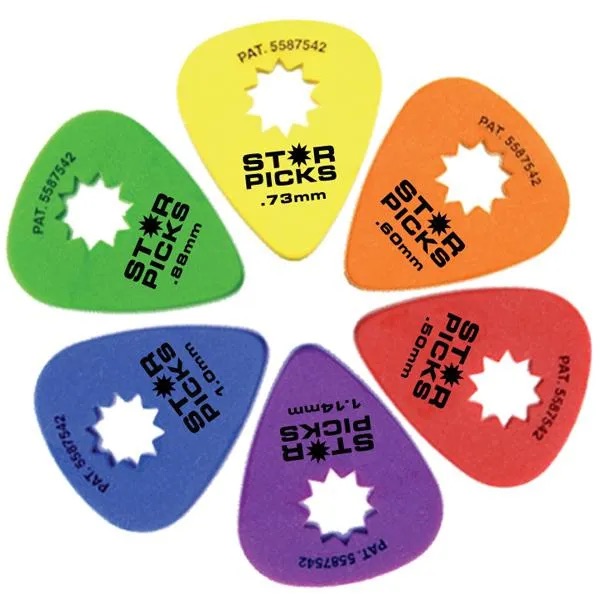
My personal preference is the blue and purple, but again, your choice may be different. In an upcoming post, I’ll share more about thin vs. thick uses, but for now, here’s a breakdown of the thickness by color:
Or you can buy a sample pack if you want to try out different thickness until you find your preferred choice.
I provide links to several of the products mentioned above so you can use my affiliate links. You don’t pay more by using these. It just helps support me.
 learnyourguitar.com
Leave a comment